

 In recent years, it has become Renewable energy a key pillar in economic and environmental development plans globally. Climate challenges, rising fossil fuel prices, and international pressure to reduce carbon emissions have pushed governments and investors to seek alternative and sustainable solutions. Al-Jadwa Company presents to you Detailed feasibility study For a renewable energy project.
Renewable energy, whether solar, wind, hydro, or even biomass, offers vast potential for environmentally friendly electricity generation. It also presents investors with an opportunity to capitalize on a growing market characterized by continuous technological advancements and increasing government support.
The setup Detailed feasibility study A renewable energy project is not just an administrative step, but rather the cornerstone that defines the project's path, reveals its economic and technical feasibility, contributes to risk mitigation, and ensures long-term sustainability.
First: The importance of feasibility studies for renewable energy projects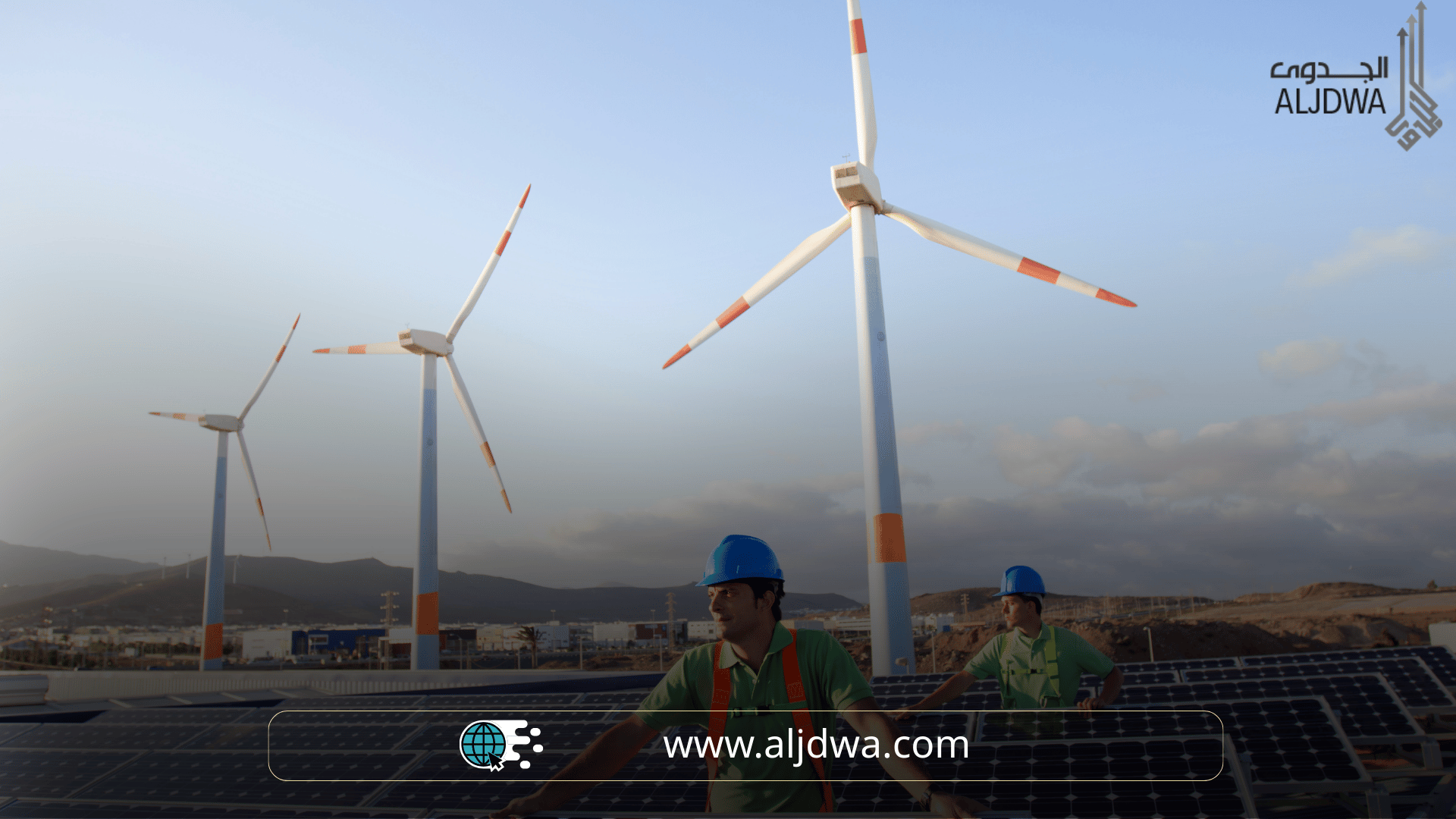
The importance is manifested Renewable energy projects In several economic, environmental, and strategic aspects:
- Increasing demand for energyWith urban expansion and rapid industrial growth, the need for new and safe energy sources is increasing. Given the limitations of oil and gas resources, relying on renewable energy becomes a strategic option to ensure a continuous supply.
- Government directionsMost governments today are implementing policies that support clean energy projects, such as offering tax incentives, simplifying licensing processes, launching favorable financing programs, and even enacting laws that require electricity companies to purchase a portion of their energy production from renewable sources.
- Environmental protectionRenewable energy projects effectively contribute to reducing greenhouse gas emissions, help limit air and water pollution, and preserve biodiversity.
- Diversifying income sourcesFor investors, renewable energy projects are a relatively stable, long-term source of income, as power purchase agreements can be signed for periods ranging from 10 to 20 years, ensuring a steady cash flow.Another suggested topic: AI Feasibility Study or Feasibility Study Company? Smart Comparison Guide
Second: Steps for preparing a feasibility study for a renewable energy project
Turn your idea into a successful project now!
Project management isn't just about steps, it's a journey that requires tools and specialized support. With our digital products like
Feasibility و Consulting feeYou can guarantee the success of your project with well-thought-out steps.
Learn more about our services and benefit from innovative solutions to turn your idea into a real project.
- Market study
This phase aims to analyze the project environment and understand the target market dynamics.
- Local Demand AnalysisData is collected on the amount of electricity consumed annually, the percentage of renewable energy's contribution to the energy mix, and consumer acceptance of clean energy use.
- Competitor analysisIdentifying existing projects in the same field, determining their production capacity, electricity selling prices, and the types of technologies they use.
- Monitor global trendsStudying the impact of international agreements like the “Paris Agreement on Climate” on local energy policies, and identifying export or regional electricity interconnection opportunities.
- Technical study
This phase defines the technical and logistical requirements for project implementation.
- Choosing an energy typeIt must be determined whether the project will rely on solar power, wind power, or a combination of both, based on the nature of the site and available resources.
- Site selectionThe site is analyzed in terms of solar radiation, wind speed, or proximity to water sources, in addition to studying the possibility of connecting to the electrical grid.
- Equipment and TechnologiesSpecify the type of solar panels or turbines, storage systems (like batteries), inverters, and monitoring and control systems.
- Financial Study
It is one of the most important parts of the feasibility study as it determines the economic viability of the project.
- Capital costsIt includes the cost of purchasing equipment, construction costs, consulting studies, and licensing fees.
- Operating costsMaintenance works, salaries, insurance, and spare parts replacement costs are covered.
- Projected revenueIt depends on the selling price of electricity, the contracts signed, and the expected annual production.
Third: Estimated Cost and Revenue Model
| Item | Estimated Cost (in USD) | Notes |
| Buy solar panels | 400,000 | For a project with a capacity of 1 megawatt |
| Equipment installation | 100,000 | Includes labor, transportation, and infrastructure |
| Licenses and studies | 20,000 | Varies by local legislation |
| Annual maintenance | 15,000 | They recur annually and include inspection and repair. |
| Total Annual Revenue | 120,000 | Assuming a selling price of 0.121 TP4T per kilowatt-hour |
NoteThese figures are estimates and subject to change based on project location, market prices, and production technologies.
Fourth: Risk analysis and mitigation methods
- Electricity sale price fluctuationsThe solution is to sign long-term power purchase agreements (PPAs) with electricity companies or industrial consumers.
- Technical malfunctionsUsing high-quality equipment, establishing a regular preventive maintenance plan, and training the technical team.
- Legislative changesPeriodically review new laws and policies, and work with legal counsel to adapt to any changes.
- Environmental risksConduct a comprehensive environmental assessment before project commencement and utilize techniques that minimize environmental impact.
Fifth: Environmental and Social Feasibility
- Environmental feasibilityThe project contributes to reducing carbon emissions, conserves natural resources, and reduces reliance on imported fossil fuels.
- Social feasibilityThe project provides local employment opportunities in the fields of engineering, maintenance, and management, and contributes to improving the quality of life by providing clean energy at stable prices, especially in remote areas.
Sixth: Final Recommendations
- Start with a small or medium-sized project to reduce risk and gain experience.
- Choosing technology with proven efficiency and high durability to ensure continuity.
- Leveraging green finance programs and international grants.
- Establishing partnerships with research institutions and universities to develop innovative technologies and improve performance.
Frequently Asked Questions
- What is the payback period for a renewable energy project?
Typically ranging from 5 to 8 years, this can decrease if government support is available or if the selling price of electricity is high. - 2. Can the project be implemented in areas far from cities?
Certainly, in fact, some types of projects, such as solar and wind energy, are more effective in remote areas due to the abundance of space and the absence of industrial pollution. - What incentives do governments offer?
Tax exemptions, subsidized loans, direct financial support, and guaranteed purchase of energy produced at attractive prices. - Is the project affected by weather fluctuations?
To some extent, and this is why it is preferable to combine more than one energy source (e.g., solar and wind) to achieve greater stability in production.
Conclusion
Investing in Renewable energy projects No longer just an alternative option, it has become an economic and environmental necessity in a world rapidly moving toward sustainability. Preparation Feasibility study Comprehensive and accurate planning is the true guarantee of project success because it determines the optimal path in terms of cost, return, and risk. With technological advancements and government support, the present time is ideal for investing in this field, achieving rewarding profits while contributing to protecting the planet for future generations.